Advancing UK Aerospace, Defence, Security & Space Solutions Worldwide
  • Home
  • /
  • Aerospace
  • /
  • Smiths Detection, Microsoft and Heathrow to develop AI tool to uncover wildlife trafficking

Aerospace Security

Smiths Detection, Microsoft and Heathrow to develop AI tool to uncover wildlife trafficking
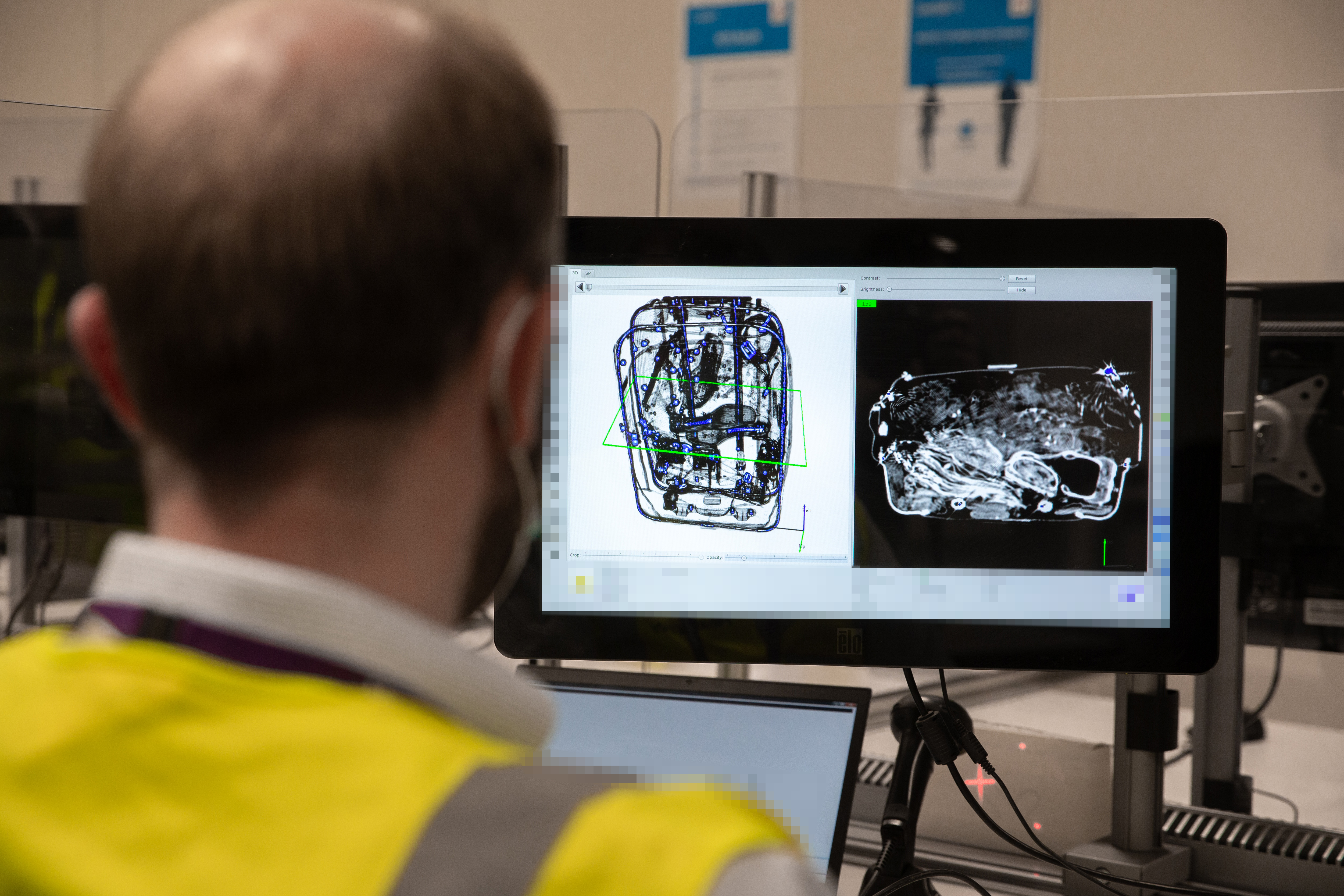
Smiths Detection has collaborated with Microsoft and Heathrow in the development of a first of its kind multispecies AI model designed to uncover illegally trafficked wildlife concealed in baggage and air cargo. Initial testing of the algorithm which took place at Heathrow has shown a success rate of over 70% in identifying trafficked animals, including ivory.

Image courtesy Smiths Detection

As part of Project SEEKER, an extensive library of X-ray images taken from Smiths Detection’s CTX 9800 baggage scanners at Heathrow were used to train the Microsoft AI for Good model. The machines can screen up to 250,000 bags a day, generating a multitude of data for inspection.

Advertisement
PTC rectangle

Globally, illegal wildlife trafficking is among the five most lucrative global crimes and is often run by highly organised criminal networks. Combatting wildlife trafficking could therefore cut off revenue streams to organised crime and help stop animal poaching in its tracks. Tackling the issue could also contribute to the reduction of Zoonotic diseases (animal to human) which have been recently linked to wildlife trafficking.

“We’re incredibly pleased with the initial results of this trial, which have been achieved by combining Smiths Detection’s and Microsoft’s technologies to create a usable solution for this very real problem. The trial has demonstrated that using AI-powered technology to automatically uncover threats and contraband significantly reduces operator burden,” said Richard Thompson, Market Director, Aviation at Smiths Detection. “We’re very much looking forward to strengthening our collaboration with Microsoft further as we work towards our respective ambitions of using AI for good and making the world a safer, better place.”

“SEEKER is testament to the impact we can make when we work collaboratively across the private and public sector. This tool can be deployed with existing screening and security infrastructure and can empower those working on the frontline of illegal wildlife trafficking to better detect, seize and investigate trafficked items and the criminal network behind them,” said Daniel Haines, Data and Artificial Intelligence Solution Specialist at Microsoft. “Following this successful trial, we’re calling for major transport hubs including airports to deploy the technology and put the model to work on regional illegal wildlife trafficked priorities along with NGOs and law enforcement agencies to share intelligence data. Together, we can stop illegal wildlife trafficking in its tracks.”

Jonathan Coen, Director of Security at Heathrow, said: “Project SEEKER and our partnership with Microsoft and Smiths Detection will help us keep one step ahead of traffickers, by exploring new technology that will help us protect the world’s most precious wildlife.”

Advertisement
Security & Policing Rectangle

Project SEEKER was presented today at an event hosted by Microsoft with The Royal Foundation and the Duke of Cambridge. The charity, which supports the work of The Duke and Duchess of Cambridge, is committed to tackling the trafficking of wildlife products and forms partnerships with businesses to identify and implement solutions.



Advertisement
ECS leaderboard banner
UK hydrogen airport trial sets out roadmap for further studies

Aerospace

UK hydrogen airport trial sets out roadmap for further studies

18 February 2026

A new report into the UK’s first airside trial of multiple hydrogen-powered ground support equipment (GSE) has confirmed that hydrogen can be safely and effectively integrated into airport ground operations, whilst setting out a series of essential next steps needed to accelerate hydrogen adoption and decarbonisation across the aviation sector.

Kent collaborates on Pre-FEED study for Eq.flight SAF demo plant

Aerospace

Kent collaborates on Pre-FEED study for Eq.flight SAF demo plant

18 February 2026

Integrated energy services partner, Kent, has collaborated with Equilibrion during a successful bid for funding from the UK Department for Transport’s Advanced Fuels Fund (AFF) and with that funding for Equilibrion and its partners, Kent is delivering the Pre-Front-End Engineering Design (Pre-FEED) for Eq.flight, an advanced power-to-liquids ...

TEKEVER launches UAS Training School at West Wales Airport

Aerospace

TEKEVER launches UAS Training School at West Wales Airport

18 February 2026

Today, provider of AI-centred uncrewed aerial systems, TEKEVER, has announced the official opening of its new Training School at West Wales Airport.

UK

Aerospace

UK's January air traffic soars into 2026

17 February 2026

January’s UK air traffic increased by 1,725 flights in 2026 versus the previous year, equivalent to a 1% uptick in flights flying in UK airspace.

Advertisement
ODU RT
Responsive Engineering unveils apprentice-built Welding Academy

Aerospace

Responsive Engineering unveils apprentice-built Welding Academy

17 February 2026

Responsive Engineering, the daughter company of Pearson Engineering, marked National Apprenticeship Week with the unveiling of its new Welding Academy, a unique training space built almost entirely by its apprentices using repurposed and recycled materials.

UK pioneers 3D printing of aircraft parts using recycled titanium

Aerospace Defence

UK pioneers 3D printing of aircraft parts using recycled titanium

17 February 2026

QinetiQ, in partnership with Additive Manufacturing Solutions Limited (AMS Ltd.), has completed the maiden flight of an aircraft containing a 3D printed structural component, made from recycled titanium.

Advertisement
PTC rectangle
Advertisement
Babcock LB Babcock LB