SSTL celebrates launch of two Galileo Satellites on Ariane 6
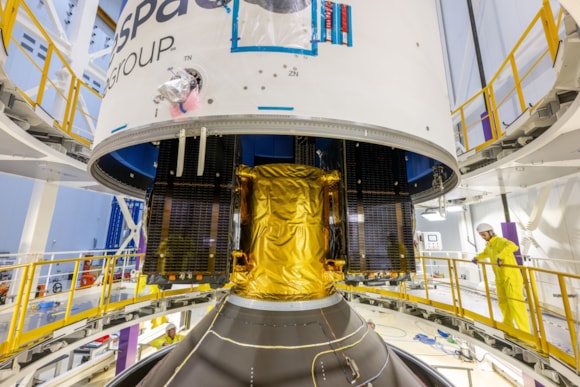
Image courtesy SSTL
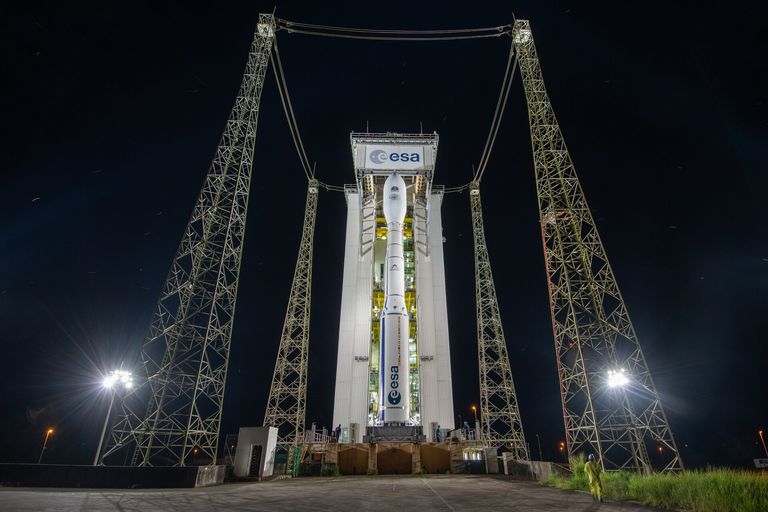
Surrey Satellite Technology Ltd (SSTL) today celebrates the successful launch of the latest pair of Galileo First Generation satellites, SAT-33 and SAT-34 carrying SSTL payloads, which lifted off from Europe’s Spaceport in French Guiana aboard an Ariane 6 launch vehicle.
The mission marks the fourteenth launch under the Galileo programme and the first time Galileo spacecraft have flown on Europe’s new heavy-lift rocket.

SSTL supplied the navigation payloads for both satellites from its Guildford facility in the UK, continuing its long-standing contribution of 34 PNT payloads to Europe’s flagship satellite navigation system. The payloads were subsequently integrated onto the satellite platforms by OHB in Germany before final preparation for launch under ESA’s oversight.
Once commissioned, SAT 33 and SAT 34 will join the operational Galileo constellation at 23,222 km, serving as spares to strengthen system availability, continuity, and resilience. Galileo today benefits billions of users worldwide — from smartphone navigation and precision agriculture to maritime operations, emergency services, and critical national infrastructure.
Sir Martin Sweeting, SSTL’s Founder and Chairman, said: “Galileo has been central to SSTL’s story for more than two decades, and we are immensely proud to see another pair of our payloads reach orbit. Each launch represents a further strengthening of Europe’s navigation capability, and it is always a pleasure for the Guildford team to witness their work take its place within this remarkable constellation.”
The launch also highlights European progress in autonomous space access. Ariane 6 - flying in a two-booster configuration and powered by the Vulcain 2.1 and Vinci engines - successfully deployed both satellites before manoeuvring its upper stage into a graveyard orbit, ensuring the long-term safety of spacecraft operating in medium Earth orbit.
Galileo’s constellation, which first achieved full planned coverage in 2024, continues its evolution. Four First Generation satellites remain awaiting launch before the introduction of the Second Generation series, which will incorporate fully digital payloads, electric propulsion, enhanced clocks, inter-satellite links, and experimental timing technologies.
SSTL’s involvement in Galileo, commencing with the successful first GIOVE-A demonstration satellite, remains a cornerstone of the company’s navigation heritage, and today’s launch reinforces its role in delivering trusted, high-performance payloads for Europe’s most ambitious space missions.