UK Defence Investment Plan must provide clarity for industry, says ADS chief



ADS Chief Executive Kevin Craven has told MPs that the UK’s Defence Investment Plan (DIP) must be supported by clearer procurement commitments, greater programme detail and long-term funding certainty if industry is to invest with confidence and deliver at scale.
Giving evidence to the House of Commons Defence Committee during its session on the implications of the DIP for British industry on 20 October, Craven welcomed the plan’s strategic direction – particularly its shift towards integrated systems, artificial intelligence (AI) and autonomy – and its reflection of lessons learned from Ukraine.
However, Craven said the absence of sufficiently detailed commitments was limiting the plan’s value as a signal to businesses across the defence supply chain.
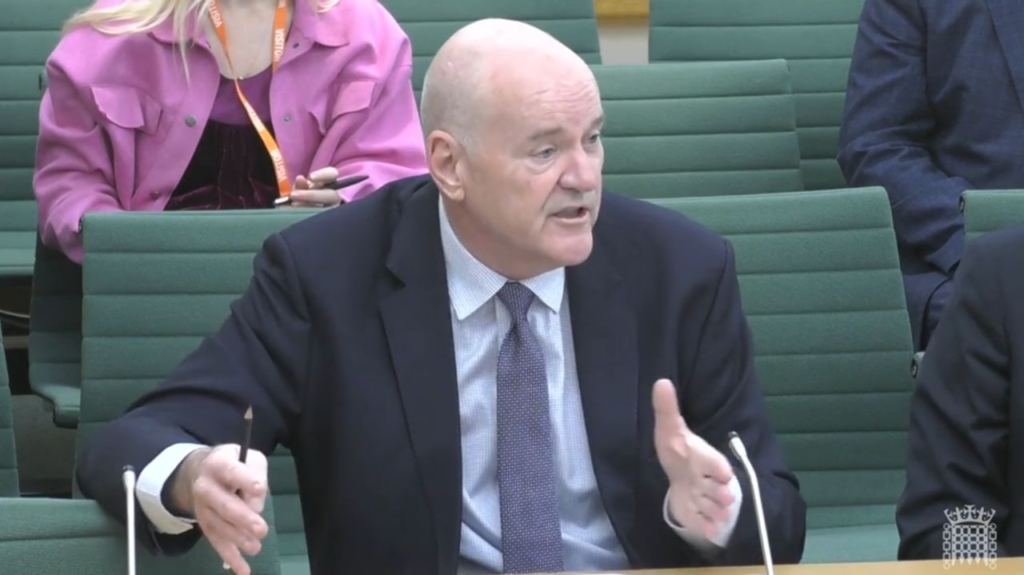
While welcoming the overall direction of the plan, Craven argued that strategic intent alone was not enough to unlock industrial investment.
“Intent is not the same as a commitment that is suitable for investors in defence,” he told MPs.
British defence industry needs detail, not just direction
“We welcome the strategic direction of the [DIP],” Craven told MPs, pointing to its focus on emerging technologies and operational lessons from Ukraine.
“It’s a strategic plan. It’s not a detailed, granular plan as we were used to with the acquisition pipeline that was represented by the ten-year equipment plan,” Craven added.

Craven told the Defence Committee that the detail needed to provide certainty, enable investment plans and support readiness and deterrence was “not” yet available in sufficient measure.
He also backed a clear pathway towards spending 3.5% of Gross Domestic Product (GDP) on defence. “It’s critical for our allies, critical for the UK that we have that certainty,” he said.
Craven said ADS remained “very, very concerned” about the absence of a clearly defined pathway towards both 3% and 3.5% of GDP defence spending targets, arguing that industry, defence planners and allies all required greater long-term certainty.
He also linked defence spending directly to economic growth, telling MPs that ADS analysis suggests reaching 3% of GDP on defence could support an additional 50,000 UK jobs, while a move to 3.5% could support a further 85,000 jobs.
Craven said long-term certainty would help ensure investment, skills and manufacturing capacity are developed in the UK rather than competing international markets.
“Headlines don’t make for good investment,” he told MPs, arguing that businesses need funded programmes and long-term commitments before investing in facilities, skills and production capacity.
Making the UK’s renewed defence investment effort work for SMEs
Craven also highlighted the need to turn the UK government’s support for small and medium-sized enterprises (SMEs) into practical assistance.
He supported the concept of the Defence Office for Small Business Growth but suggested it lacked the resources needed to meet industry expectations.
Craven told MPs that the office currently had four members of staff, compared with a recommended requirement of 29.
Considering this, Craven referred to the concept as “more of a signposting function and information function” than an organisation that is actively helping individual SMEs work within the defence sector.

UK must unlock greater opportunities through NATO procurement
Craven also urged the UK to make better use of the NATO Support and Procurement Agency (NSPA), which offers another route for British companies to access more opportunities in the defence sector and work with international partners.
He told MPs that the UK was the fifth largest user of NSPA in 2022 but is now eighth, despite significant growth in the agency’s activities.

He described the trend as a significant problem and recommended stronger UK engagement with the agency. Better use of existing NATO procurement mechanisms, alongside a clearer domestic pipeline, could help British suppliers reach a broader defence market.
Craven’s evidence underlined a central test for the DIP: whether its priorities become funded programmes, accessible opportunities and sustained demand for the UK defence industry.
While the strategic direction of the plan has been welcomed, delivering the detail will determine whether businesses can invest with confidence and translate the plan into industrial capability.
Sign up for our newsletter and get our latest content in your inbox.
Similar Reads





Sign up for our newsletter. Select all sectors relevant to you.
Related