Advancing UK Aerospace, Defence, Security & Space Solutions Worldwide
  • Home
  • /
  • Aerospace
  • /
  • ZeroAvia completes testing of new inverter design

Aerospace

ZeroAvia completes testing of new inverter design
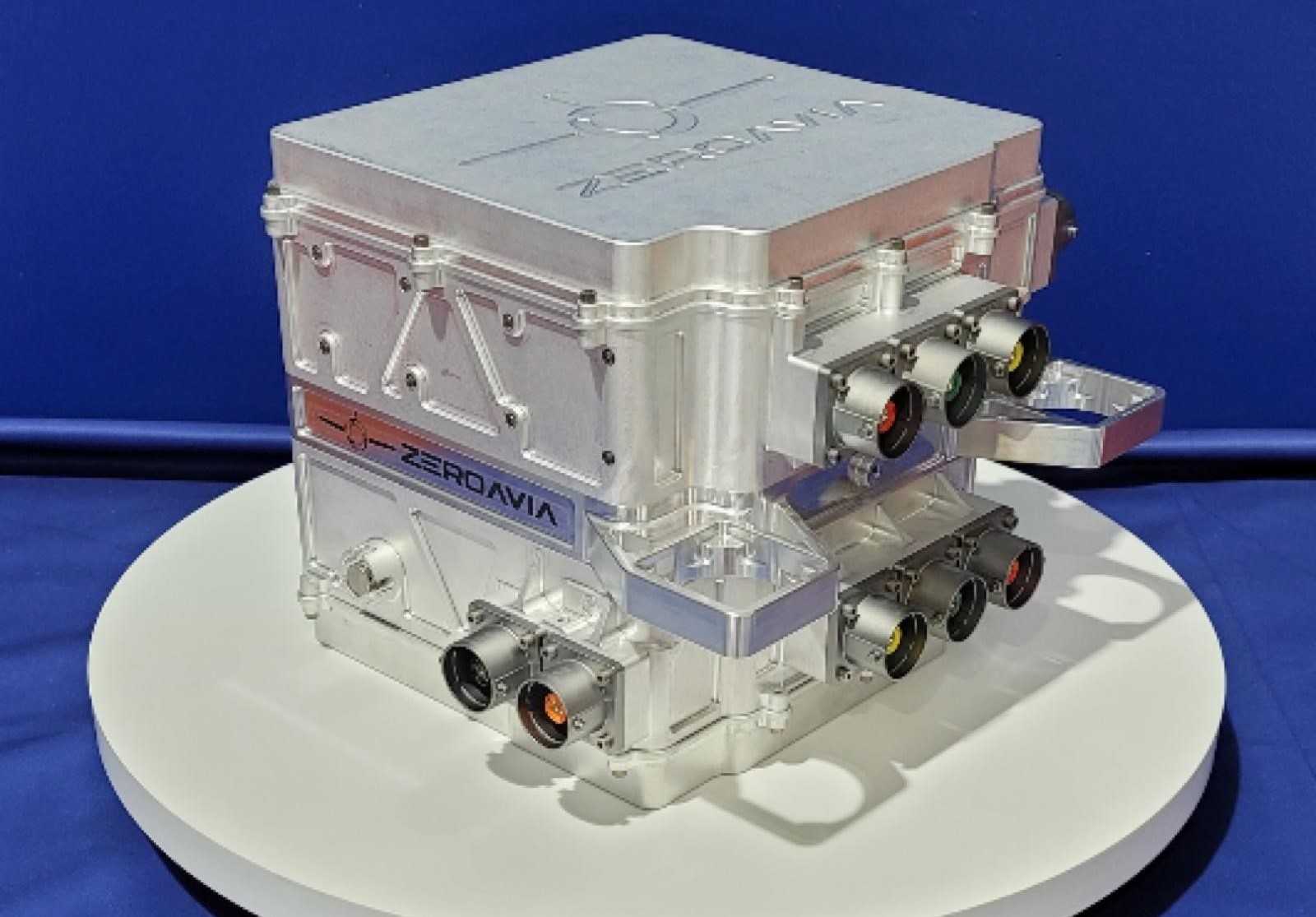
ZeroAvia today announced that it has successfully completed initial testing of its 200kW continuous power inverter design.


Above: ZeroAvia's dual configuration inverter.
Courtesy ZeroAvia

The inverter has been operating at 230 kW from 800 Volts of direct current (Vdc), with a power density of over 20 kW/kg. This inverter performance is a large step change for the industry.
 
The highly weight-efficient inverter technology is an integral part of the zero-emission, hydrogen-electric aviation engines that ZeroAvia is developing. Inverters take the DC-power supplied by the electric power source and convert it to Alternating Current while controlling the flow to electric motors. Such power sources can be hydrogen fuel cells (as in ZeroAvia engines), batteries, or even various hybrid systems. Hydrogen-electric systems are predicted to have the furthest reaching environmental benefits of all technologies considered practical for commercial aviation, with only low temperature water vapor exhaust.  
 
ZeroAvia has developed its own silicon carbide inverters over the last two years, with a number of innovations around semiconductor module designs, gate driver designs, modularity of phase circuits, and high degree of manufacturability. Additionally, advanced thermal management technologies and integration enable reliable high performance at altitude and successful engine compartment location. The company has developed the inverters in single (225kw peak / 200kw continuous) and dual (450kw peak / 400kw continuous) configurations.
 
ZeroAvia’s core inverter technology will be used across all sizes of engines – starting with 600kW ZA600 engine for nine-19 seat aircraft and then later also integrated into the HyperCore motor – the modular 900kW electric motor designed to be stacked in series in ZA2000, the company’s engine variant for 40-80 seat regional turboprops.  
 
With ZA600 certification efforts underway across the US and UK, this validation of the key engine component is a major milestone for the company and supports the plan to complete certification by the end of 2025. It also represents an IP breakthrough, with the ZeroAvia inverter representing a step change in specific power performance for power electronics devices.  

Advertisement
Security & Policing Rectangle

Val Miftakhov, Founder and CEO, ZeroAvia, said: “Our electric propulsion team in Washington State has delivered transformative technology here in a record short time window, moving rapidly with an agile mindset. This kind of technological breakthrough will create enormous value for the company and will have massive impact on transitioning the entirety of aviation away from fossil fuels.”




Advertisement
PTC rectangle


Advertisement
Babcock LB Babcock LB
Wales to be UK launchpad for advanced autonomous tech

Aerospace Defence Security

Wales to be UK launchpad for advanced autonomous tech

20 February 2026

Thousands of skilled workers in Wales will be involved in the design, testing and manufacture of advanced autonomous technologies and unmanned systems, as a landmark £50 million Defence Growth Deal positions the nation at the forefront of Britain’s defence future.

NPAS increases aircraft available for deployment

Aerospace Security

NPAS increases aircraft available for deployment

19 February 2026

In January this year, the National Police Air Service (NPAS) was able to increase the number of aircraft that were available for operational deployment.

Alloyed secures ATI Programme funding to develop ABD-1000AM

Aerospace

Alloyed secures ATI Programme funding to develop ABD-1000AM

19 February 2026

Developer and manufacturer of advanced metallic components, Alloyed Ltd, has secured funding from the ATI Programme for an ambitious £1 million project to accelerate the development of ABD-1000AM, a next-generation nickel-based superalloy designed for additive manufacturing.

Birmingham Airport publishes new sustainability strategy

Aerospace

Birmingham Airport publishes new sustainability strategy

19 February 2026

Birmingham Airport (BHX) has published its new sustainability strategy for 2026 to 2030, outlining the next strategic steps on its journey to becoming a more sustainable and socially responsible business.

Advertisement
ODU RT
UK hydrogen airport trial sets out roadmap for further studies

Aerospace

UK hydrogen airport trial sets out roadmap for further studies

18 February 2026

A new report into the UK’s first airside trial of multiple hydrogen-powered ground support equipment (GSE) has confirmed that hydrogen can be safely and effectively integrated into airport ground operations, whilst setting out a series of essential next steps needed to accelerate hydrogen adoption and decarbonisation across the aviation sector.

Kent collaborates on Pre-FEED study for Eq.flight SAF demo plant

Aerospace

Kent collaborates on Pre-FEED study for Eq.flight SAF demo plant

18 February 2026

Integrated energy services partner, Kent, has collaborated with Equilibrion during a successful bid for funding from the UK Department for Transport’s Advanced Fuels Fund (AFF) and with that funding for Equilibrion and its partners, Kent is delivering the Pre-Front-End Engineering Design (Pre-FEED) for Eq.flight, an advanced power-to-liquids ...

Advertisement
ODU RT
Advertisement
Babcock LB Babcock LB