Vertical Aerospace secures up to £10m UK funding as MOD backs defence applications


Vertical Aerospace has secured up to £10 million in additional UK government funding as the Ministry of Defence (MOD) considers military applications for its electric aircraft. The funding would support an expansion of the company’s plans beyond urban air mobility.
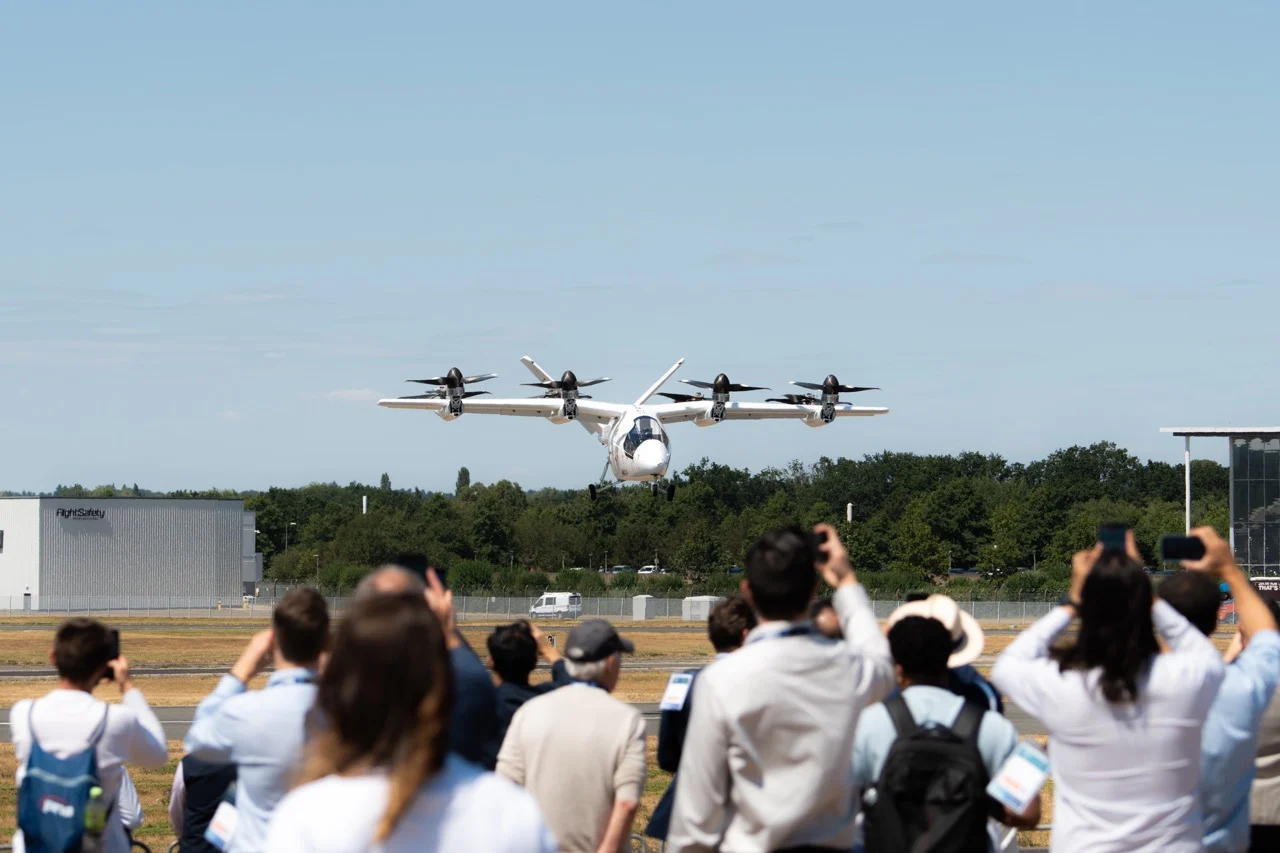
The announcement came as the Bristol-based eVTOL developer completed the first public demonstration of a piloted transition flight at the Farnborough International Airshow.
The company’s VX4 prototype successfully transitioned from conventional wing-borne flight into hover before making a vertical landing. The flying display follows the world’s first piloted wingborne-to-hover transition the aircraft completed earlier this year at Cotswold Airport. The Farnborough flight is the first time the manoeuvre was performed before a public audience.
Government backs UK eVTOL industry
Vertical revealed it has been awarded up to £10 million in new funding from the UK government through the Aerospace Technology Institute (ATI) Programme.
The investment increases total UK government support for Vertical to up to £48 million. The funding would accelerate development of next-generation aerospace technologies and support high-value manufacturing jobs in Britain.
The company said the latest funding package will help keep advanced aerospace design, engineering and future manufacturing capability in the UK as it progresses towards certification and commercial service.
Stuart Simpson, CEO of Vertical Aerospace, described the funding as “a major vote of confidence from the UK Government in Vertical, in our aerospace sector and in the UK’s opportunity to lead the next generation of aviation.”
He added: “Today’s proposed support helps create a clear pathway from innovation to industrial scale-up. It means we will continue to create high-value jobs, strengthen Britain’s advanced manufacturing base, and build aircraft that will be exported to customers around the world. ”
The company is targeting CAA certification in 2028, with commercial entry into service expected in 2029.
Its production aircraft, known as Valo, would carry a pilot and four passengers at speeds of up to 150 mph on routes of around 100 miles. The company has initially designed the aircraft to serve airport transfers, regional connections and premium urban transport.
Ministry of Defence eyes military variants
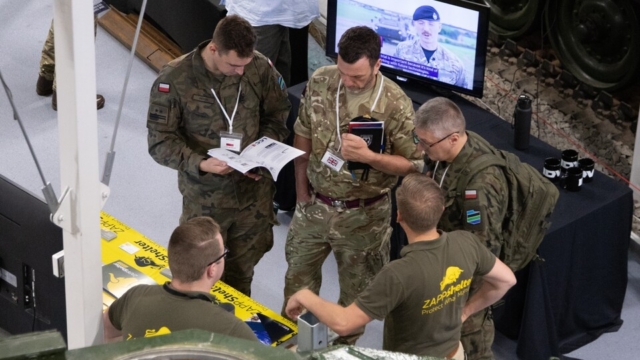
The UK Ministry of Defence has expressed interest in the defence potential of Vertical’s technologies.
According to the company, the MOD is evaluating applications across:
- eVTOL aircraft
- Hybrid-electric propulsion
- Autonomous flight capabilities
Defence officials are interested in a hybrid-electric version of the aircraft that would combine electric propulsion with a gas turbine generator. VX4 is designed for short regional and urban missions, but the hybrid concept would extend range while maintaining the aircraft’s low acoustic and thermal signature.
Vertical believes those characteristics could make the aircraft suitable for logistics, personnel transport and other military missions where reduced noise and heat signatures provide operational advantages.
Public transition flight marks Farnborough milestone
The Farnborough demonstration showcased one of the most technically demanding phases of eVTOL flight.
The VX4 approached the runway in conventional fixed-wing flight before transitioning into hover, tilting its forward propellers upwards before descending vertically to land.
Transition flight is a key certification hurdle for winged eVTOL aircraft. It requires seamless control as the aircraft shifts from aerodynamic lift generated by its wings to rotor-borne lift.
The successful public demonstration follows months of progressive flight testing as Vertical works towards full certification of its production aircraft.
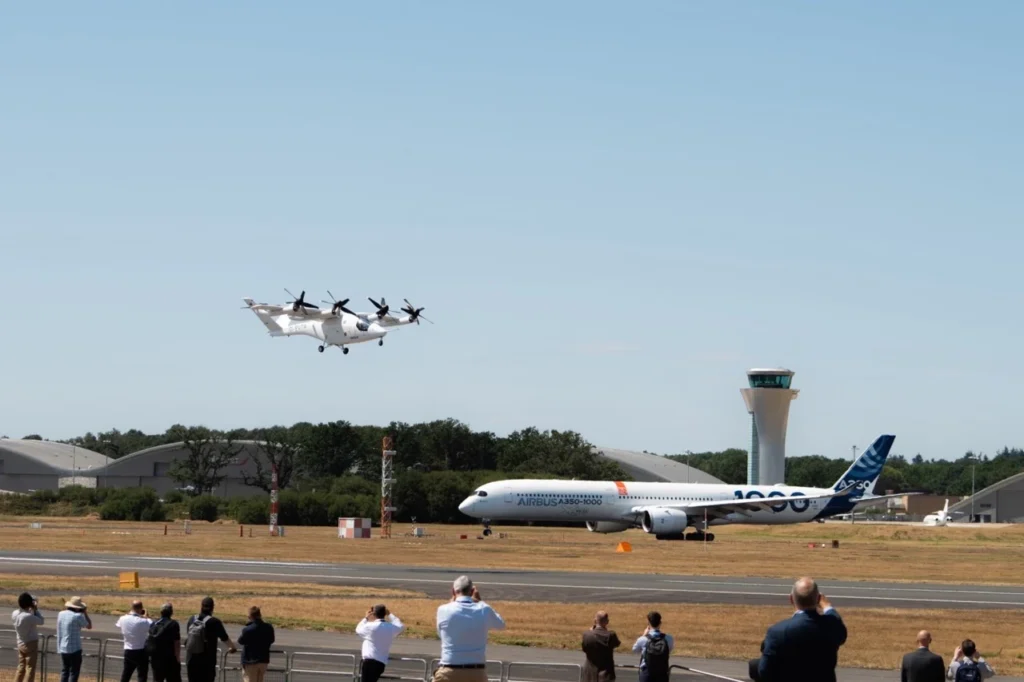
“Successfully demonstrating a public transition flight here is more than a technical milestone – it is proof that electric aviation is moving from promise to commercial reality,” Simpson said of the VX4’s first flight at Farnborough.
Kevin Craven, CEO of ADS Group, described the flight as “a strong signal of the momentum building behind the UK’s advanced air mobility sector.” He added: “It shows how British companies are helping shape the next generation of aerospace technologies and turning innovation into real-world capability right here at Farnborough Airshow.”
Gary Elliott, CEO of the Aerospace Technology Institute, said: “This flight is proof of the transformative power of government and industry jointly supporting innovation across the aerospace supply chain.”
Gareth Rogers, CEO, Farnborough International Airshow, noted that the Vertical flying display joins a “proud legacy of pioneering ‘firsts’” that have taken place at the Airshow.
“Seeing Vertical Aerospace demonstrate this new era of electric aviation at Farnborough is a powerful reminder of the role that British engineering and the airshow continues to play as a global stage for innovation, ambition and progress,” Rogers said.
The Vertical Aerospace aircraft is scheduled to perform daily flying displays at Farnborough International Airshow through Friday 24 July.
Sign up for our newsletter and get our latest content in your inbox.
Similar Reads

Sign up for our newsletter. Select all sectors relevant to you.
Related