The price of transformation: The biggest losers in the UK’s Defence Investment Plan


![AAC Wildcat AH1 during Ex Khanjar Oman 2021 [MOD CC - SAC Charlotte Hopkins] (CROP)](https://www.adsadvance.co.uk/wp-content/uploads/2026/08/AAC-Wildcat-AH1-during-Ex-Khanjar-Oman-2021-MOD-CC-SAC-Charlotte-Hopkins-CROP-scaled.jpg)
The UK is embarking on one of the most far-reaching restructurings of its armed forces in a generation, with the British government’s 2026 Defence Investment Plan (DIP) combining a major increase in defence spending with a series of significant capability retirements.
Published on 30 June, the DIP commits the UK Ministry of Defence (MOD) to £298bn of defence spending over the next four years, growing the budget by an additional £15bn since the previous spending review settlement.
The government has made it clear that this extra funding will not simply sustain the existing force. Established capabilities are being sacrificed as the UK shifts towards larger stocks of autonomous systems, cheaper weapons and a more digitally connected military.
Among the most consequential casualties are the British Army’s fleet of Leonardo Helicopters AW159 Wildcat AH1 battlefield reconnaissance helicopters, the Royal Air Force’s (RAF’s) Shadow R1 intelligence-gathering aircraft and the Royal Navy’s planned Type 83 air-defence destroyer.
Elsewhere, programmes including Watchkeeper, Storm Shadow and Skynet are also being cut or reshaped, although in these cases the picture is more complicated. Some have clear replacements. Others are being absorbed into broader architectures rather than replaced like-for-like.
Taken together, the decisions reveal the central gamble at the heart of the DIP: retire relatively small, expensive or manpower-intensive fleets and replace their functions with larger numbers of autonomous, networked or cheaper systems.
The question is whether those replacements will arrive quickly enough.
The DIP’s biggest losers at a glance
| Capability / programme | What is happening | Replacement / future model | Key timing | Transition risk |
|---|---|---|---|---|
| Wildcat AH1 | Early retirement from 2027 | Project Nyx, Corvus and other autonomous systems | Nyx planned by 2030 | High |
| Shadow R1 | Early retirement planned | No named direct successor | Currently due out by 2030 | High |
| Type 83 destroyer | Planned programme abandoned | Common Combat Vessels and Type 91–94 uncrewed systems | CCV construction from early 2030s | High |
| Watchkeeper WK450 | Retirement confirmed | Tekever AR5 under Project Corvus | Watchkeeper out March 2027; AR5 deliveries through 2029 | Medium |
| Storm Shadow | To be phased out | Low-cost cruise missiles, Stratus and Deep Precision Strike | Successor programmes developing into the 2030s | Medium |
| Skynet 6 NSS | Narrowband element cancelled | Extended Skynet 5 life plus commercial and allied services | Skynet 6A still due in 2027 | Lower |
British Army Wildcat becomes one of the DIP’s biggest casualties
One of the DIP’s most consequential decisions is the early retirement of the British Army’s Wildcat AH1 fleet from 2027
Rather than introducing another conventional crewed battlefield reconnaissance helicopter, the government intends to transfer an increasing share of the Wildcat’s surveillance and strike roles to autonomous systems.
Defence officials have argued that sending crewed reconnaissance helicopters forward over an increasingly transparent battlefield is becoming difficult to justify when drones can undertake much of the surveillance mission without exposing aircrew to the same risk.
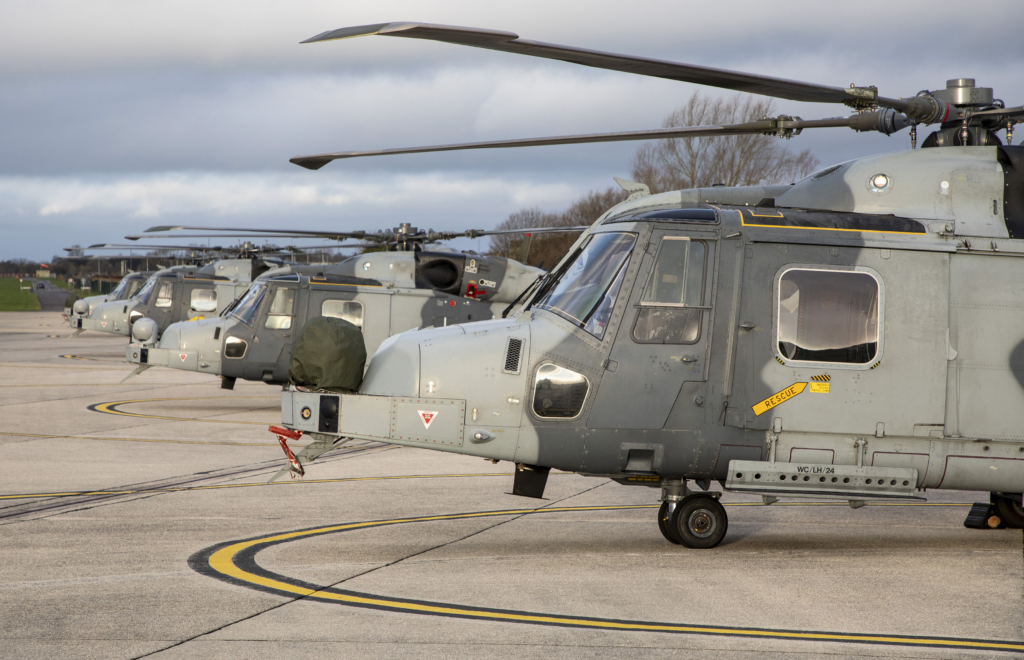
The Army’s future architecture will include Project Corvus for persistent surveillance and Project Nyx, which intends to provide up to 24 armed autonomous aircraft to operate alongside the service’s AH-64E Apache AH2 attack helicopters by 2030.
The DIP has allocated £220m to Nyx over the next four years.
There is, however, an important distinction between reconnaissance and utility aviation. A drone can find and attack a target, but it cannot perform every task carried out by a helicopter.
The DIP therefore also allocates £680m over four years to the New Medium Helicopter (NMH) programme, which will support operations globally while uncrewed systems assume an increased share of reconnaissance and strike missions.
The UK MoD has selected Leonardo Helicopters’ AW149 for NMH. In total, 23 aircraft will be built at Leonardo’s Yeovil facility, supporting roughly 3,300 jobs.
However, the first AW149s are not expected to be delivered until mid-2030, with formal entry into service planned for January 2031.
The Fleet Air Arm’s maritime-configured Wildcat HMA2 helicopters will remain in service for longer, although the MOD ultimately expects these too to give way to autonomous systems by the mid-2030s.
RAF Shadow R1 faces retirement with no named successor
If Wildcat illustrates the shift from crewed reconnaissance towards autonomy, the future of the RAF’s Shadow R1 fleet creates an even more obvious capability question.
The DIP explicitly announces the early retirement of Shadow, but unlike Watchkeeper or Wildcat it does not identify a direct replacement programme or confirm a revised withdrawal date.
The fleet is currently due to leave service in 2030.
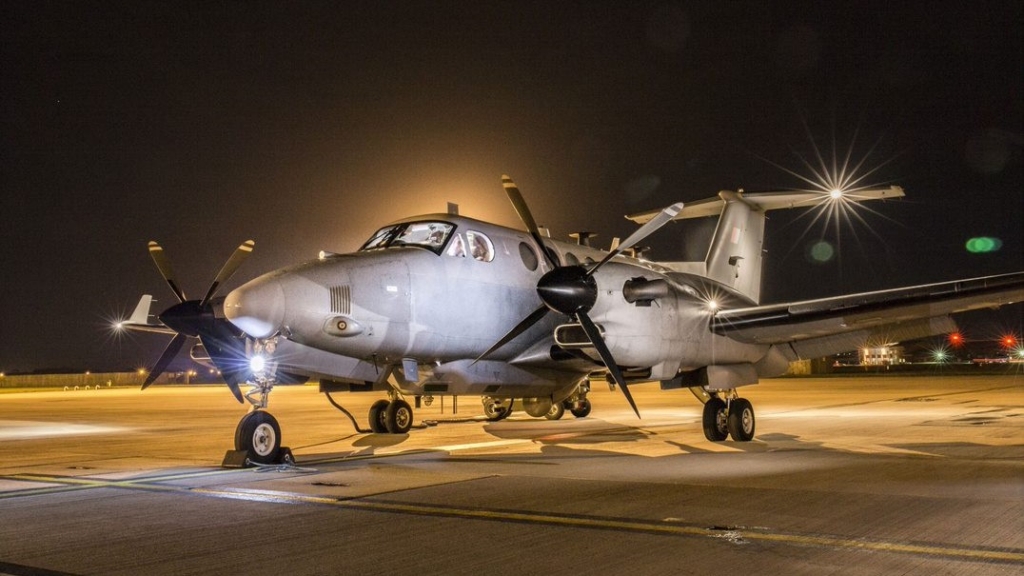
Based on the King Air B350ER, Shadow provides a specialised crewed intelligence, surveillance and reconnaissance capability and has supported tactical intelligence-gathering operations for the RAF.
The government has evidently judged that the capability does not fit neatly enough with the digitally connected force it wants to build.
The RAF is instead being reorganised around a wider mix of crewed and uncrewed aircraft. The DIP commits £300m to the British Collaborative Combat Aircraft (CCA) programme, known as StormFighter, with a demonstrator expected to fly before 2030.
The air arm will also retain and upgrade other dedicated ISR capabilities, including RC-135W Rivet Joint, E-7A Wedgetail AEW1, MQ-9B Protector RG1 and P-8A Poseidon MRA1.
None, however, has been identified as a direct successor to Shadow.
That makes its retirement one of the DIP’s more conspicuous bets. An established ISR asset is being removed while the architecture intended to absorb its functions remains comparatively undefined.
Type 83 gives way to the Hybrid Navy
Perhaps the most radical naval casualty is the planned Type 83 air-defence destroyer.
Type 83 had been expected to replace the Royal Navy’s six Type 45 destroyers, but the programme has disappeared in favour of at least six Common Combat Vessels (CCVs) and a family of uncrewed vessels.
The CCV sits at the heart of the DIP’s proposed ‘Hybrid Navy’, built around networks of crewed and uncrewed warships, submarines, sensors and munitions.
With construction expected to begin in the early 2030s, the government describes the future CCV as a ‘central brain’ capable of controlling autonomous systems distributed across maritime task groups.
![BAE Systems concept for Type 83 destroyer [BAE Systems]](https://www.adsadvance.co.uk/wp-content/uploads/2026/08/BAE-Systems-concept-for-Type-83-destroyer-BAE-Systems-1024x526.jpg)
The ships will operate alongside the Royal Navy’s Type 26 and Type 31 frigates and a family of autonomous platforms.
These include the Type 91 uncrewed missile platform, Type 92 uncrewed underwater sensing vessel, Type 93 extra-large uncrewed underwater vehicle and Type 94 uncrewed sensor and radar platform.
The DIP has allocated at least £1.3bn to the wider Hybrid Navy programme over the next four years.
The first large autonomous vessels, including prototypes of the Type 91 missile platform and Type 93 extra-large underwater vehicle, are due to enter service by 2030.
This is not simply a case of replacing a Type 45 with a different destroyer. The government is changing the concept itself.
Where Type 83 would have concentrated weapons, sensors and air-defence capability aboard another large crewed warship, the Hybrid Navy intends to distribute those functions across several crewed and uncrewed platforms.
The Type 45s are expected to begin leaving service from 2035. Whether the new architecture can mature quickly enough to replace them will become one of the most important tests of the naval transformation promised by the DIP.
Watchkeeper is a loser, but hardly a surprise casualty
Not all the platforms heading for retirement represent the same level of strategic risk.
The clearest example is the British Army’s troubled Watchkeeper WK450 tactical intelligence, surveillance, target acquisition and reconnaissance drone.
Derived from the Israeli Hermes 450, Watchkeeper has proved one of the MOD’s most turbulent procurement programmes since entering service in 2014. Its departure has been coming for some time.
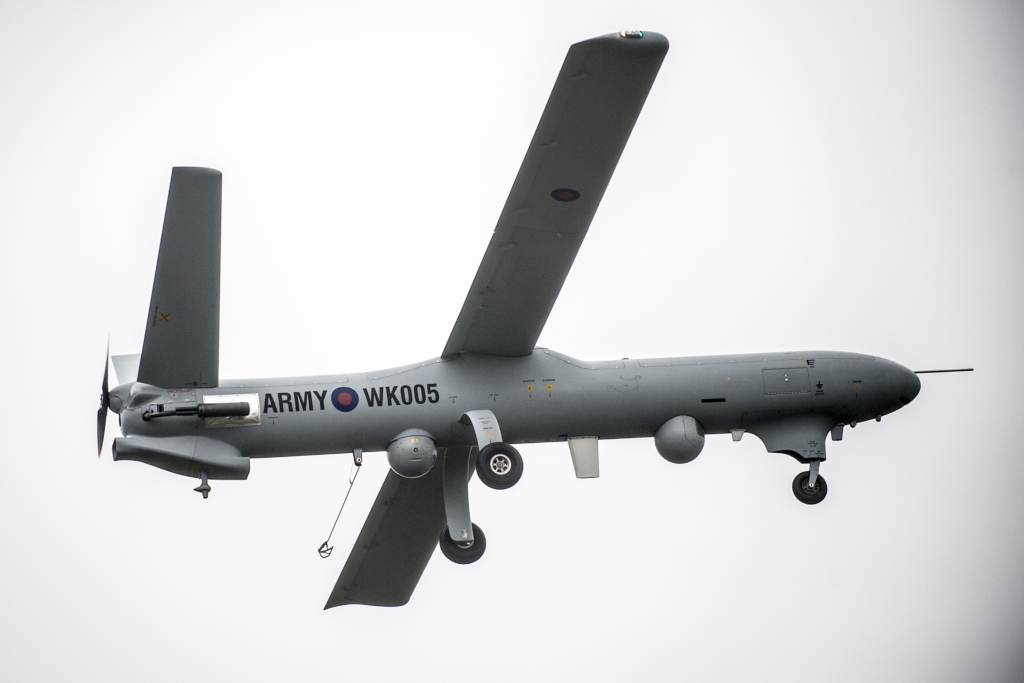
Watchkeeper was initially due to leave operational service in March 2025, before the MOD pushed retirement back to March 2027 to avoid a lengthy capability gap. Keeping it going for the extra period is expected to cost around £95.7m.
Its replacement is also much clearer than for Shadow.
The DIP allocated £450m to Project Corvus, including £310m of additional investment during the plan’s first four years, to deliver up to 24 long-range ISR drones.
In July 2026, the MOD revealed that it had selected the Tekever AR5 medium-altitude, medium-endurance UAS for the programme.
Under a contract worth up to £400m, Tekever will manufacture up to 24 AR5s for the Army at its new facility in Swindon.
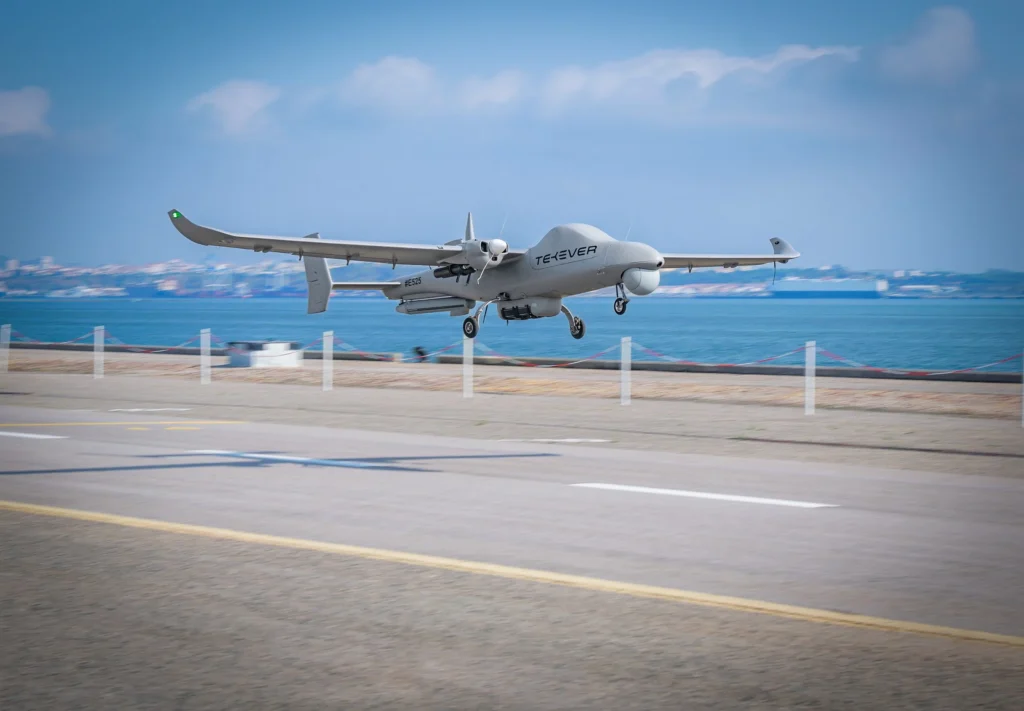
The significance is that the MOD is not simply replacing one drone with another.
AR5 will form part of the wider Project Asgard ‘recce-strike’ architecture, connecting sensors, drones, command systems, artificial intelligence and weapons.
Under the concept, drones can identify targets and feed information into a digital network, where commanders and AI-assisted systems process the data before artillery, missiles, aircraft or other drones deliver the effect.
The DIP has committed an additional £370m to Asgard over the next four years.
Watchkeeper is therefore less an orphaned casualty than one of the clearest examples of the doctrinal change the DIP is trying to deliver.
Storm Shadow is being replaced, not simply cut
The UK’s long-serving Storm Shadow air-launched cruise missile will also eventually disappear under the DIP, but describing it simply as another loser risks missing the wider story.
The government argues that lessons from the war in Ukraine have demonstrated the value of possessing larger quantities of lower-cost weapons alongside more sophisticated long-range missiles.
It has therefore allocated £300m to new low-cost cruise missiles, initially air-launched but potentially adaptable for land and sea platforms.
At the more sophisticated end, the UK is committing £1.4bn to the Stratus programme, formerly known as FC/ASW.
Developed by MBDA alongside France and Italy, Stratus comprises a stealth-optimised Low Observable weapon and a supersonic-capable, ramjet-powered Rapid Strike missile.
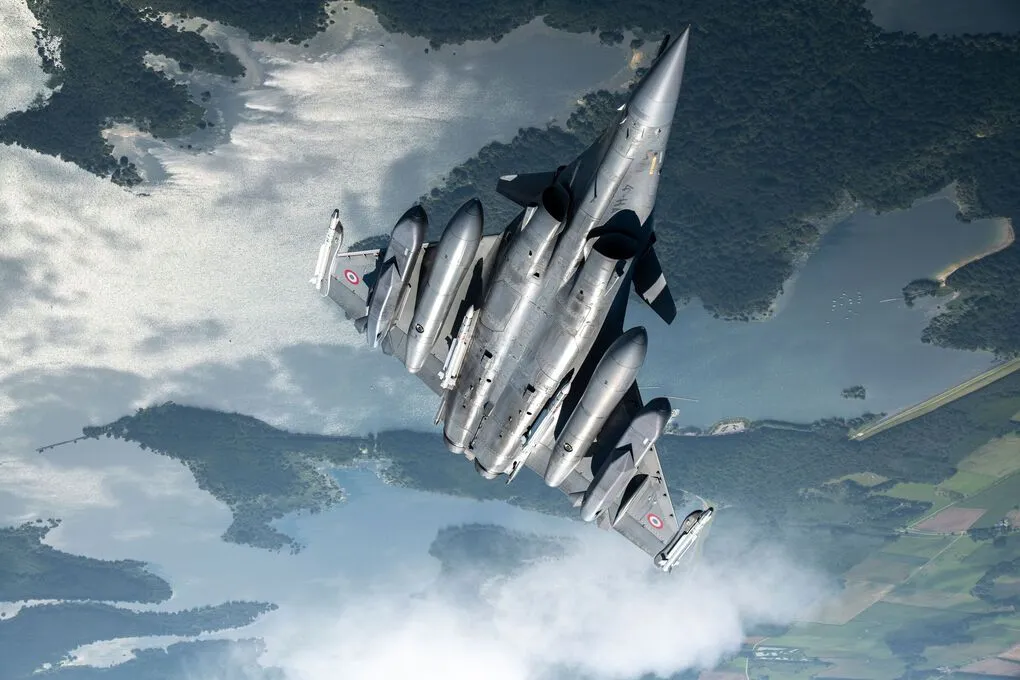
There is a caveat. London has ordered a review of Stratus, expected to examine options for the programme’s future and conclude by 1 September 2026.
The UK has also committed an initial £770m to developing Deep Precision Strike weapons with Germany and other NATO partners. These are intended to reach more than 2,000km and include stealth cruise and hypersonic concepts.
The emerging strike architecture is therefore intended to operate in three layers: larger quantities of cheaper cruise missiles, sophisticated Stratus LO and RS weapons, and much longer-range Deep Precision Strike systems.
Storm Shadow is undoubtedly being phased out, but unlike Shadow R1 or Type 83, the capability it provides is not disappearing without a successor plan.
Skynet 6 shows sovereignty itself is changing
Even space has not escaped the restructuring.
The DIP confirms that the UK will not proceed with the planned Skynet 6 Narrowband Satellite System programme.
Instead, the MOD intends to extend the operational life of the existing Skynet 5 constellation while making greater use of commercial ‘space as a service’ models and allied capabilities.
Claims that the entire Skynet 6 programme has been cancelled are therefore misleading.

Skynet 6A remains on track for launch in 2027, while the broader programme continues to develop the UK’s future military satellite communications architecture.
The DIP allocates £2.3bn to SATCOM development over the next four years and proposes another £9bn of space investment between 2030 and 2035.
What has changed is the balance.
The previous Skynet architecture envisaged sovereign narrowband and wideband satellite elements supported by commercial services. The DIP narrows that sovereign requirement and places greater emphasis on resilience through several providers and allied access.
In this case, the casualty is not military satellite communications itself, but the assumption that Britain needs to own and operate every part of the architecture.
The real gamble is what happens in between
Taken together, the casualties of the DIP reveal a coherent, if risky, strategy.
Taken together, the casualties of the DIP reveal a coherent, if risky, strategy. Britain is trading relatively small numbers of expensive, specialised and often crewed platforms for greater mass, autonomy and a military architecture in which capabilities are distributed across networks rather than concentrated in individual assets.
London’s underlying argument is that the UK cannot afford to reproduce the force structure of the past. Future conflicts will demand larger quantities of sensors and weapons, faster digital ISTAR networks and autonomous systems that can be risked or lost without sacrificing personnel.
Accordingly, the DIP intends to spend at least 10% of its equipment budget on novel technologies including AI, autonomy, new weapons and uncrewed systems, rising to 16% by 2029/30.
The challenge is succession.
Several capabilities being retired are operational today. Some of the systems expected to replace them remain in development, competition or concept stages.
The strategic bet is that the future force will eventually be more numerous, resilient and lethal than the platforms it replaces.
For the UK Armed Forces, the critical test will be how quickly that future arrives after the casualties of the present have disappeared.
Sign up for our newsletter and get our latest content in your inbox.
Similar Reads


Sign up for our newsletter. Select all sectors relevant to you.
Related