

Airbus Wing of Tomorrow enters 3-year flight testing for next-generation aircraft


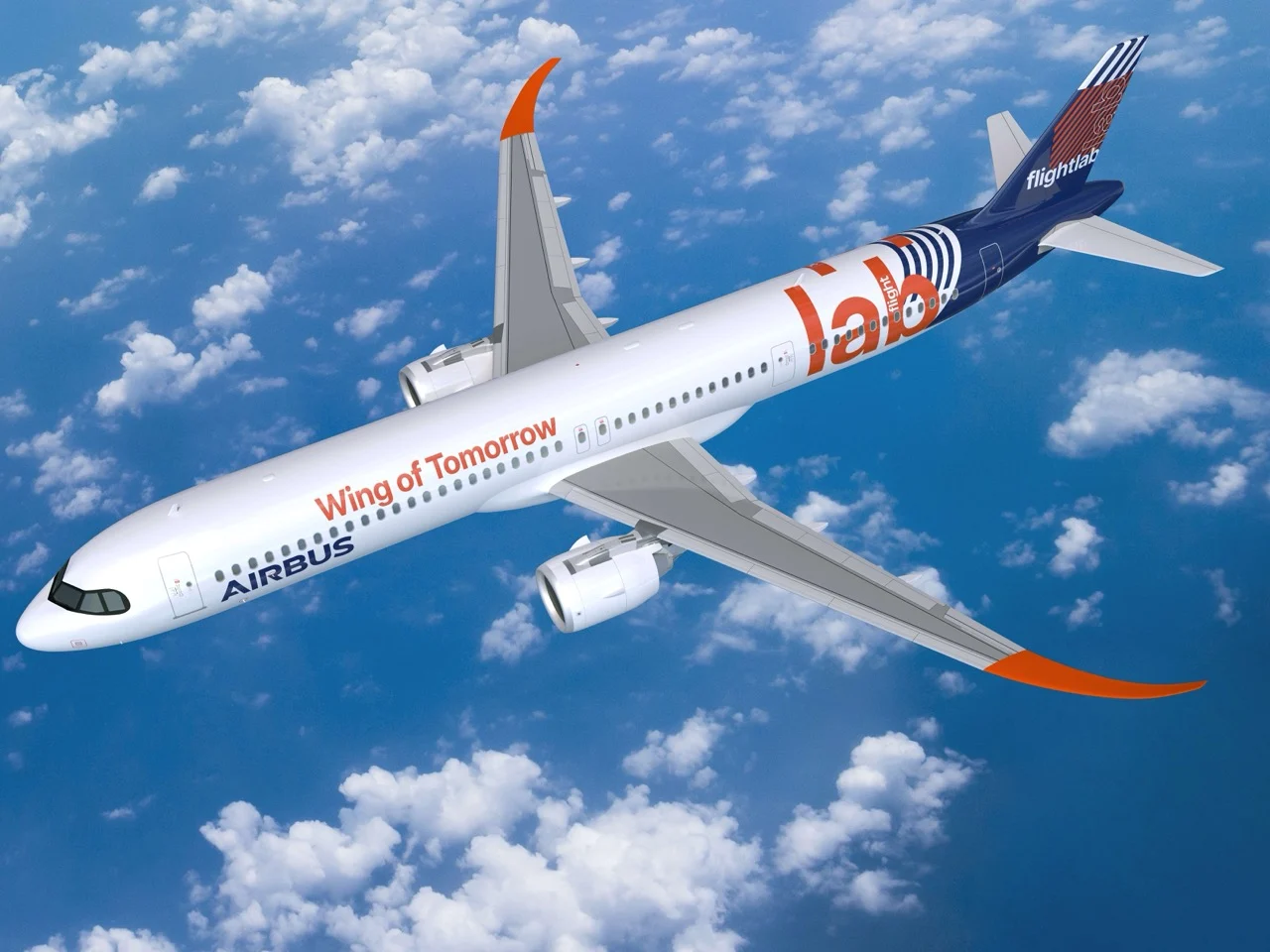
Airbus is launching a three-year flight-test campaign for its Wing of Tomorrow programme, one of the planemaker’s largest research and technology initiatives.
Announced at the Farnborough International Airshow 2026, the programme will see advanced wing extensions designed and built in the UK installed on an A321neo test aircraft to evaluate how longer, more efficient wings perform in real flight conditions.
The test programme highlights the UK’s central role in Airbus’ global wing development strategy and in the technologies expected to underpin the manufacturer’s next-generation single-aisle aircraft.
UK-developed wing technology takes flight
Over the next three years, Airbus will design, manufacture and flight test several-metre-long wing extensions that simulate a future folding wing in its fully extended position.
The wing extensions will be assembled at Airbus’ Wing Technology Development Centre in the UK before being transported to Toulouse for installation and flight testing aboard an A321neo.
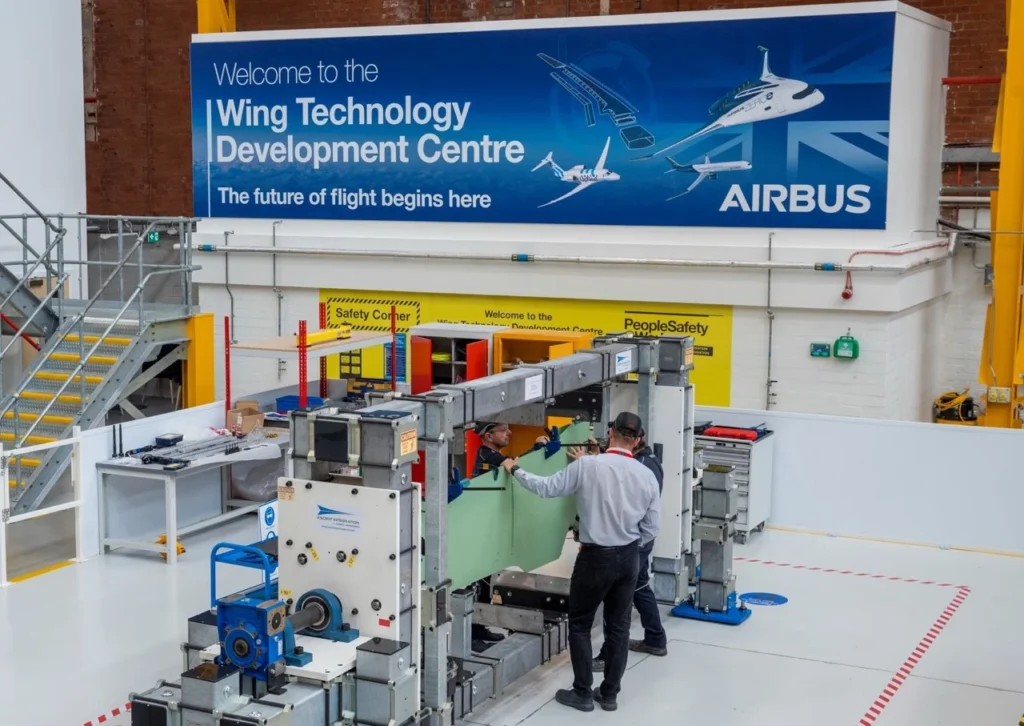
Extensive onboard instrumentation will allow engineers to measure aerodynamic performance, structural behaviour and aircraft handling, providing critical real-world data to validate years of digital modelling and wind tunnel testing.
The programme is intended to reduce development risk while helping Airbus unlock the benefits of longer, higher-aspect-ratio wings for future aircraft.
Backed by more than £227 million of UK investment
Since 2014, the Wing of Tomorrow programme has received £227 million through the Aerospace Technology Institute (ATI) Programme, a partnership between the Aerospace Technology Institute, the Department for Business and Trade and Innovate UK.
The investment reflects the UK’s longstanding position as Airbus’ global centre of excellence for wing design and manufacture. Airbus designs every wing for its commercial aircraft in the UK, with major engineering and manufacturing operations in Filton and Broughton.
The programme has already produced three full-scale, 17-metre ground-based wing demonstrators while evaluating over 100 new manufacturing and assembly technologies.
A key technology for future aircraft
Alongside advances in propulsion, wing design remains one of the biggest opportunities to improve aircraft efficiency.
The Wing of Tomorrow programme is focused on developing wings that are longer, lighter and more slender to reduce aerodynamic drag and lower fuel burn and emissions.
“The wing is one of the biggest levers we have to improve flight efficiency, which is why the Wing of Tomorrow is so critical for our next-generation single-aisle aircraft,” said Sue Partridge, Airbus Head of Wing of Tomorrow. “This flight-test campaign will allow us to safely challenge traditional design limits and explore the benefits of longer wings.”
Supporting Airbus’ next-generation single-aisle aircraft
The flight-test campaign complements the eXtra Performance WING (eXPWING) demonstrator being developed by Airbus UpNext, which is investigating wings capable of changing shape during flight to maximise aerodynamic efficiency.
While the two programmes explore different technologies, both aim to deliver the next generation of more efficient single-aisle aircraft, with the UK continuing to play a leading role in wing innovation.
Sign up for our newsletter and get our latest content in your inbox.
Similar Reads




Sign up for our newsletter. Select all sectors relevant to you.
Related