UK team trials new ultra-endurance air vehicle
 The Phoenix is designed to repeatedly transition from being lighter than air to being heavier than air so thrust is generated to propel the craft forward.
Variable-buoyancy propulsion is used in underwater remotely operated vehicles, but has never before been harnessed for large aircraft. The system means the uninhabited vehicle is self-sufficient in energy so could, in theory, be operational for an unlimited period of time, an innovation which could revolutionise the telecommunications industry.

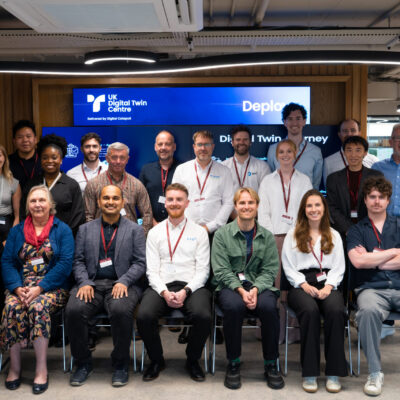
The team behind the ultra-long endurance autonomous aircraft includes representatives from academia and industry. Andrew Rae (left), Professor of Engineering at the University of the Highlands and Islands Perth College UHI Campus, led the design of the aeroplane: “The Phoenix spends half its time as a heavier-than-air aeroplane, the other as a lighter-than-air balloon. The repeated transition between these states provides the sole source of propulsion.
“The vehicle’s fuselage contains helium to allow it to ascend and also contains an air bag which inhales and compresses air to enable the craft to descend. This motion propels the aeroplane forwards and is assisted by the release of the compressed air through a rear vent.
“This system allows the Phoenix to be completely self-sufficient. The energy needed to power its pumps and valves is provided by a battery which is charged by lightweight flexible solar cells on its wings and tail.
“Vehicles based on this technology could be used as pseudo satellites and would provide a much cheaper option for telecommunication activities. Current equivalent aeroplanes are very complex and very expensive. By contrast, Phoenix is almost expendable and so provides a user with previously unavailable options.”

The prototype aeroplane, which is 15 metres long and has a wingspan of 10.5 metres, was flown successfully and repeatedly over a distance of 120 metres during indoor trials at the Drystack facility in Portsmouth in March. The test flight was the culmination of a three-year project to prove the viability of a variable-buoyancy powered aircraft.
The Phoenix team are now exploring collaborations with major manufacturers to take the technology to the next phase of development. The project has been part-funded by Innovate-UK, the UK’s Innovation Agency, through the Aerospace Technology Institute.
The University of the Highlands and Islands offers a range of aircraft engineering programmes and pursues research activities across the aerospace sector and in motorsport. The Perth College UHI Dunne Aeronautical Laboratory gives students access to state-of-the-art learning and research facilities in aerodynamics, propulsion and flight. These include a large flight simulator, gas-turbine rig and wind tunnels.